Chess Duels Tier List Hub
Openings and time-control picks ranked for real Roblox rated play—not fake piece power levels.
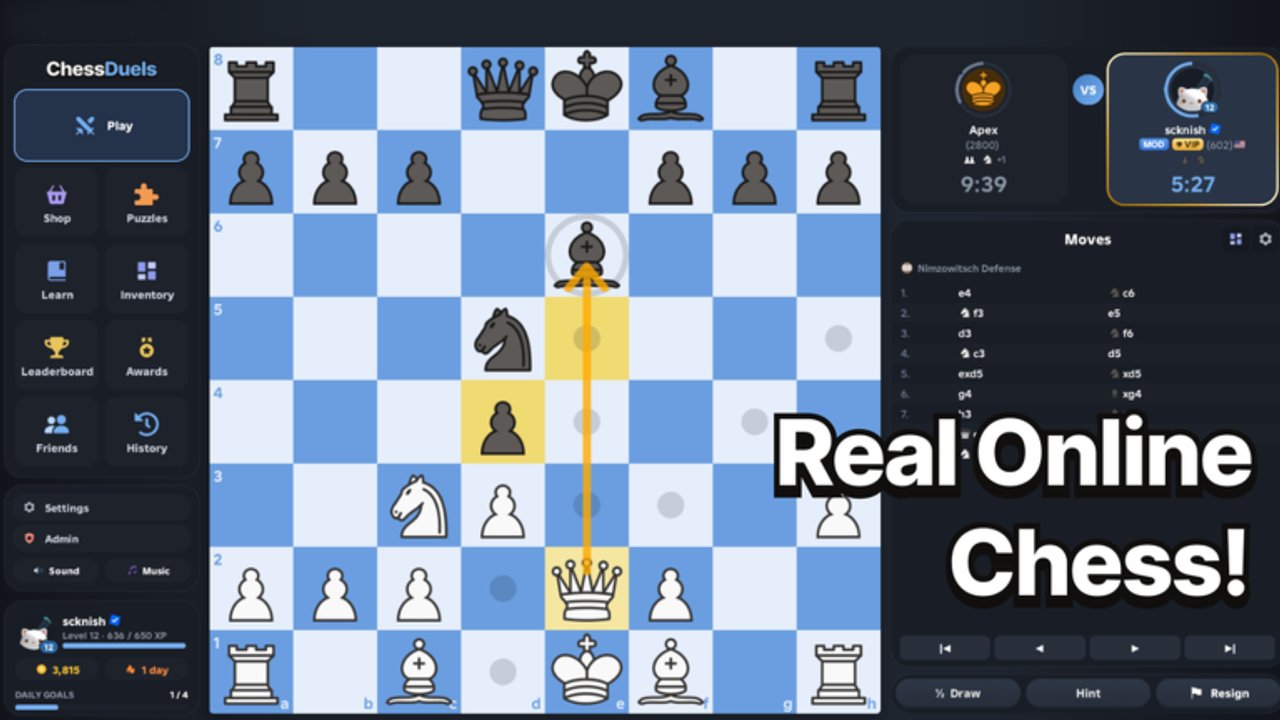
This Tier List Hub ranks practical approaches for Chess Duels on Roblox: which openings make sense for beginners versus rated climbs, and which time controls fit each skill stage. It does not invent illegal piece strengths or pay-to-win unit tiers. Chess rules stay intact—queens still outrank pawns. What changes is how openings and clocks perform under Bullet, Blitz, and Rapid queues with real opponents, cosmetics that are visual only, and a climb loop built on puzzles, lessons, and review. Use this hub with Getting Started, Time Controls, Climb Rating, and Puzzles and Lessons.
How to read these tiers
Tiers here mean practical recommendation strength for Chess Duels players right now—not objective eternal chess truth.
- S — Default recommendations for most players in that context
- A — Strong choices if you know the ideas
- B — Playable, but easier to mishandle on the clock
- C — Situational or high-maintenance for the average climber
Criteria: ease of learning, blunder resistance, time-pressure friendliness, and transfer into puzzles/lessons you can actually drill. When patches shift the meta of online habits, revisit this hub and the Updates page.
Time-control tier list by skill stage
New to Chess Duels (learning rules and UI)
- S — Rapid: Time to think, cleaner reviews, fewer mouse-slip disasters
- A — Calm Blitz: Once you stop hanging pieces every game
- C — Bullet: Wait until tactics from the puzzle bank feel automatic
Early climb (building a first stable rating)
- S — Blitz: Best volume-to-learning ratio for most accounts
- A — Rapid: Study days and repertoire changes
- B — Bullet: Short warm-ups only
Established climber (pushing a main ladder)
- S — Your chosen main mode (specialize; see climb guide)
- A — Off-mode Rapid for repair work after rough patches
- B — Off-mode Bullet for pattern warm-ups if your main is slower
Leaderboard chase
- S — Specialize hard in the mode where your peak already leads
- A — Puzzle maintenance daily so tactics keep pace with speed
- C — Mode hopping every session — destroys feedback quality
Deep habits for each clock live in the Time Controls guide. Do not promote yourself to Bullet mains because a friend flexes a high Bullet number; their Rapid might tell a different story.
Opening approach tiers for beginners (Rapid / calm Blitz)
Focus on solid structures you can explain in one sentence.
As White
- S — Italian / related calm 1.e4 systems: Clear development, early king safety, natural tactics themes
- S — London-style 1.d4 setups: Stable plans, fewer forced theoretical duels in Roblox queues
- A — Queen’s Gambit style play: Excellent if you completed the matching lessons and know the pawn breaks
- B — Sharp gambit lines: Fun in casual, expensive when you forget the idea on move seven
- C — Ultra-rare sidelines every game: You will outrun your own memory before you outrun opponents
As Black
- S — Solid e5 or c5 systems you actually studied: Consistency beats surprise value at low time
- A — Straightforward …d5 answers to 1.d4: Clear centers, easy development goals
- B — Hyper-modern setups: Fine with lesson support; rough if you only copy moves
- C — Experimental every-game defenses: Review tool will show the same opening disaster on repeat
Beginners should pick one White system and one Black defense for two weeks. Drill related tactics in Puzzles and Lessons, then expand.
Opening approach tiers for rated climb (Blitz focus)
Climb openings need to be fast to play and hard to collapse.
- S — Main repertoire lines with known middlegame plans: Move faster in book, spend time on the fight
- A — Slightly sharper lines you practiced vs puzzles: Use when you need winning chances against peers
- B — Trap-only openings: They farm lagging attention once, then fail against anyone awake
- C — Theoretical minefields you half-remember: Clock and memory will both abandon you
For Bullet climb sessions, demote anything that requires long calculation in the first ten moves. Promote lines with early piece activity and clear recapture sequences you can pre-move safely.
What we refuse to tier
- Individual pieces with fake power scores that break chess
- Cosmetics rarity as a combat tier (see Cosmetics — visual only)
- Scripts or exploits as a competitive tier (irrelevant to fair rated play)
- “Pay coins to win Elo” myths
If a video claims a board skin boosts win rate, ignore it. Win rate moves with blunders avoided and clocks managed.
How to use this hub week to week
- Pick your skill stage time-control tier.
- Lock S-tier openings for White and Black.
- Play a climb block with the Climb Rating stop rules.
- After repeated opening losses, demote that line to B/C for yourself until lessons fix it.
- Recheck Updates when the game adds modes, rewards, or UI that change queue habits.
Sample loadouts
Beginner Rapid loadout
- Time control: Rapid (S)
- White: calm 1.e4 Italian-style (S)
- Black: one solid studied defense (S)
- Training: daily puzzles + one lesson segment
Blitz climber loadout
- Time control: Blitz main (S), Rapid repair days (A)
- White/Black: two-and-two repertoire max
- Training: themed puzzles after review misses
- Shop: clearest board/pieces only during sessions
Bullet specialist loadout
- Time control: Bullet main only after tactics baseline
- Openings: simple, pre-move-friendly structures (S/A)
- Avoid: trap museums and low-contrast piece sets
Related guides
- Getting Started — first session checklist
- Time Controls — Bullet vs Blitz vs Rapid deep dive
- Climb Rating — review, streaks, tilt, leaderboard
- Puzzles and Lessons — 2000+ puzzles training loop
- Cosmetics — coins and visual unlocks
- Players Hub — competitive context and standout players
Treat this tier list as a living playbook for Chess Duels queues. Rank approaches by how well they survive the clock and your current skill—not by hype. When in doubt, choose the S-tier solid plan, review honestly, and let sharper C-tier experiments wait until your foundation holds.
Frequently Asked Questions
Quick answers to common Chess Duels questions.
Does this tier list change how chess pieces move in Chess Duels?
No. Standard chess rules apply. Tiers rank practical openings and time-control choices, not illegal piece powers.
Which time control is S-tier for absolute beginners?
Rapid. You get time to think and better post-game reviews before adding Blitz or Bullet volume.
Should I play sharp gambits to climb faster?
Only if you studied the ideas. Unprepared gambits are B/C for most climbers because one memory slip loses the game.
Are cosmetic rarities part of the tier list?
No. Cosmetics are visual only and do not belong in competitive strength tiers.
How often should this hub be updated?
After major Chess Duels patches or when your own data shows an opening repeatedly failing under the clock.