Chess Duels Puzzles and Lessons Training
Turn Chess Duels' puzzle bank and lesson tracks into a daily habit that shows up in rated games.
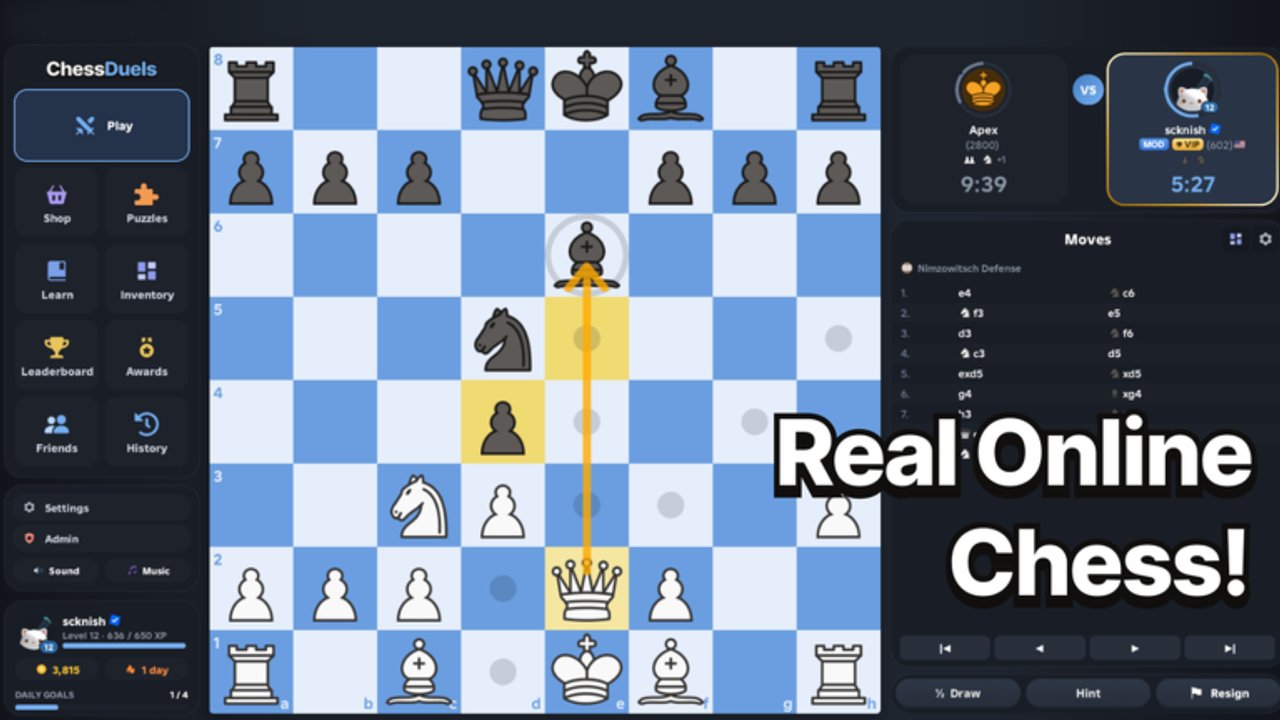
Chess Duels ships with more than 2000 puzzles plus structured lessons covering openings, tactics, and checkmate patterns. Rated Bullet, Blitz, and Rapid teach you under fire, but puzzles teach you the patterns you need before the clock starts. This guide shows how to use both systems without random clicking, how the daily puzzle badge fits a streak, and how to build a short routine that feeds Climb Rating. If you are brand new, skim Getting Started first, then come back here before you grind hours of tilted rematches.
Why puzzles beat random grinding
Every rated game mixes openings, tactics, endgames, and psychology. When you only play matches, you might see a fork once a week and a quiet mate pattern once a month. Puzzles isolate those moments so you see dozens of forks, pins, skewers, discoveries, and mating nets in a single session. That repetition is how pattern recognition forms—the same skill Bullet players lean on when they have two seconds left.
Lessons add the narrative layer puzzles skip. A good opening lesson explains why a pawn structure favors a plan. A tactics lesson groups themes so you are not solving random positions with no vocabulary. A checkmate lesson drills classic patterns (back rank, smothered, Anastasia-style nets, king hunts) until the shape jumps out in Blitz.
Use both. Lessons for understanding. Puzzles for speed and accuracy. Rated games for proof.
How to approach the 2000+ puzzle bank
Treat the bank like a gym, not a casino.
- Warm up with easy wins. Start a session with puzzles you can solve in under a minute. Confidence and focus matter more than ego.
- Then take thematic sets. When Chess Duels lets you filter or follow lesson-linked puzzles, drill one theme: forks, pins, discovered attacks, or mating patterns.
- Say the candidate moves out loud. Checks, captures, threats—same scan you need in Time Controls play.
- On a miss, pause. Replay the solution slowly. Ask what clue you ignored (undefended piece, overloaded defender, unsafe back rank).
- Stop while sharp. Ending on a long fail streak teaches frustration, not chess. Cap sessions and protect your daily streak elsewhere if needed.
Track a simple personal metric: puzzles solved correctly before your first miss, or accuracy across a ten-puzzle block. Rating numbers in puzzles are useful, but consistency beats a lucky hot streak.
Lessons: openings, tactics, checkmates
Openings
Opening lessons should narrow your repertoire, not explode it. After a lesson, play two Rapid games with that line and review the first out-of-book moment. Pair lesson picks with the practical tiers on the Tier List Hub so you are not learning a museum opening that collapses in Bullet.
Goals for opening lessons:
- Know the idea behind the first eight to twelve moves
- Know the typical pawn breaks and piece trades
- Know one trap to avoid and one trap you can set safely
Tactics
Tactics lessons are the bridge into the puzzle bank. Complete a tactics module, then immediately solve a handful of related puzzles while the theme is fresh. That spaced pairing beats binge-watching every lesson in one night.
Checkmate patterns
Mate pattern lessons pay rent in every time control. Back-rank themes decide countless Blitz games. Smothered and corridor ideas decide Bullet swindles. Schedule mate drills on days when you feel slow—patterns revive calculation when energy is low.
Daily puzzle badge and streaks
Chess Duels rewards consistency with daily goals, streaks, and awards. The daily puzzle badge is an easy win: solve the featured puzzle (or the day’s assigned set) before you queue rated. Benefits:
- You enter matches already in tactical mode
- You protect streaks without forcing a tilted Bullet session
- You collect coins and awards that fund cosmetics without needing a pay-to-win fantasy—cosmetics stay visual only
If you miss a calendar day, do not “make up” with a hundred angry puzzles at midnight. Resume the next morning with a short set and one lesson. Streaks help motivation; they should not dictate sleep or force bad study.
A practical training routine
Use this as a default week. Adjust volume to your schedule, not your ego.
Before rated play (10–20 minutes)
- Daily puzzle / badge progress
- Eight to twelve warm-up puzzles
- Optional: one short lesson segment if you are learning a new opening
After a loss streak (15 minutes)
- Review the critical position from the last rated game
- Ten puzzles in the theme you just missed (hanging piece, fork, back rank)
- Only then decide whether to requeue—see Climb Rating
Study day (30–45 minutes, no rated)
- One full lesson track section (opening or tactics or mates—not all three)
- Twenty themed puzzles
- Two Rapid games the following day to apply the lesson
Climb day
- Short puzzle warm-up only
- Main time control block with a hard stop after two losses
- One review, then stop or switch to unrated / puzzles
New players should keep study days frequent for the first two weeks. Veterans can lean on warm-ups and use deep lessons when a rating plateau appears.
Linking puzzles to real Chess Duels modes
- Bullet: prioritize speed puzzles and mate-in-one / mate-in-two recognition. Pre-move safety still comes from board habits, not puzzles alone.
- Blitz: mix medium tactics with short endgame puzzles so you convert wins when both flags are low.
- Rapid: after lessons, play Rapid so you have time to execute the plan you studied.
Do not chase puzzle rating at the expense of real games forever. Puzzles without application become a comfort hobby. The loop is lesson → puzzle → rated → review → puzzle.
Common training mistakes
- Only solving with hints. Hints feel good and teach little. Struggle for a minute, then reveal.
- Ignoring lessons because puzzles are “more fun.” You will keep falling into the same opening disasters.
- Training only when angry after losses. Anger narrows vision; cool down first.
- Collecting cosmetics instead of reviewing. Boards and trails do not raise rating. Coins are fine—just do not confuse shop progress with chess progress.
- Skipping Getting Started basics. Controls, UI, and mode choice still matter before advanced drills.
Measuring whether training works
Look for these signals over one to two weeks:
- Fewer one-move blunders in Blitz
- Faster recognition of hanging pieces in Bullet
- Cleaner conversion of won Rapid endgames
- Ability to name the tactic you missed in review
If none of those improve, change the routine: fewer random puzzles, more themed sets, more post-game review, and stricter tilt stops. Chess Duels gives you the tools—the 2000+ puzzles, the lessons, the daily badge, the review flow. Your job is to schedule them like practice, not like a slot machine.
When the patterns start appearing in real games, shift volume toward rated climb sessions and keep puzzles as maintenance. Return to deep lesson work whenever you change repertoire or stall on the leaderboard grind. Consistent small sessions beat rare marathon crams every time.
Frequently Asked Questions
Quick answers to common Chess Duels questions.
How many Chess Duels puzzles should I solve per day?
Ten to twenty focused puzzles beat a hundred distracted ones. Add more only while accuracy stays high.
Should I do lessons or puzzles first?
Do a short lesson segment first when learning a theme, then drill matching puzzles while the idea is fresh.
Does the daily puzzle badge affect my rated score?
No. It supports streaks, goals, and rewards. Your Bullet, Blitz, and Rapid ratings still change only from rated games.
Can puzzles replace playing rated games?
No. Puzzles build patterns; rated games test them under a clock and an opponent. Use both in a loop with review.
What if I keep failing the same tactic type?
Stop mixed sets. Drill that theme only, review one real game where it appeared, then return to mixed warm-ups.